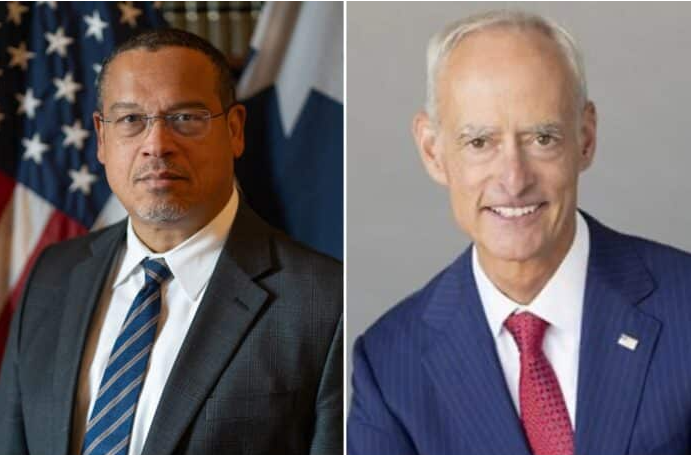
Behind the Ballot is taking a look at the millions in PAC money has been spent in the Minnesota Attorney Generals race as DFL candidate Keith Ellison and GOP candidate Ron Schutz Clash Over Fraud, Crime, and more.
Minnesota’s decades-long Democratic control of the attorney general’s office is facing a rigorous test, with a nearly dead-heat race between incumbent DFL Attorney General Keith Ellison and Republican challenger Ron Schutz.
Driven by an unprecedented influx of outside money with millions flowing in from national and local political action committees the campaign has intensified as both candidates grapple with distinct hurdles, differing supporter bases, and starkly contrasting visions for the state’s top legal office.
Outside groups have poured about 11 million into the race, nearly doubling the amount spent in 2022.
The ideological battle lines are sharp. Ellison is running primarily on his consumer-advocacy track record, highlighting achievements such as taking on corporate price-gouging, and filing dozens of lawsuits against federal policies to protect state funding and civil rights.
“Let me tell you friends, I hate fraud.” Ellison said at the 2026 DFL Convention, ” fraudsters steal money from our neighbors who need to live and thrive and I’m proud my office has won over 340 convictions for people who stole Medicaid money.”
His campaign is backed heavily by progressive groups and labor organizations, signaling a strong base focused on worker protections, environmental justice, and consumer rights.
Schutz a prominent trial lawyer, Army veteran, and former large-firm chairman has made government spending, crime, and fraud a cornerstone of his platform.
Proposing a dedicated Fraud Enforcement Division, Schutz attacks Ellison over what Republicans frame as a failure to aggressively prosecute massive state-level fraud, explicitly tying the critique to recent state-funded social services and “Feeding Our Future” scandals when explaining what he would do differently.
“We’re going to devore more resources, we’re not going to have sweetheart plea deals,” Schutz said at a campaign event in Princeton, ” We will aggressively charge cases to maximize potential for jail time.”
Schutz mainly drawing support from business-aligned organizations and conservative donors, signaling a push for more fiscal oversight and a tougher approach to criminal enforcement.
Both campaigns have also faced unique vulnerabilities and scrutiny.
Schutz has confronted questions after acknowledging that his campaign accepted donations originating from individuals tied to fraud, while Ellison continues to face hard questions regarding state oversight and his own record in preventing systemic fraud amid broader executive shakeups in Minnesota politics.
Furthermore, social policies have heavily divided the field, with Schutz pledging to block student athletes from competing on sports teams matching their biological sex, directly challenging Ellison’s active defense of transgender rights.
“They’d like to say sex and gender are the same they are not legally the same,” Schutz said, “Even under the definitional sections of the Minnesota Human rights act. The first thing that I will do when I get in office, is revoke that Attorney General’s opinion and issue a new one.”
Voters will ultimately decide the outcome at the ballot box, which could either preserve decades of Democratic control in the attorney general’s office or shift the balance of power in Minnesota’s executive branch.
Although a Republican hasn’t held the Minnesota Attorney General’s office in nearly 60 years, Keith Ellison’s razor-thin 2022 victory signals a shifting political landscape away from past DFL landslides.







Comments