BISMARCK (North Dakota Monitor) — A federal district court judge indicated he will nullify a nearly $28 million judgment against the federal government related to costs North Dakota incurred during the Dakota Access Pipeline protests so the parties can reach a settlement.
North Dakota is still set to receive a payment Attorney General Drew Wrigley described as satisfactory, but attorneys would not disclose the amount during a Friday hearing.
Attorneys for the United States and North Dakota said the settlement would allow the parties to avoid litigating the case in appeals court,putting the nearly seven-year-old lawsuit to rest.
“We’re hoping we really don’t need to fight any further,” Department of Justice attorney Jonathan Guynn said during the hearing.
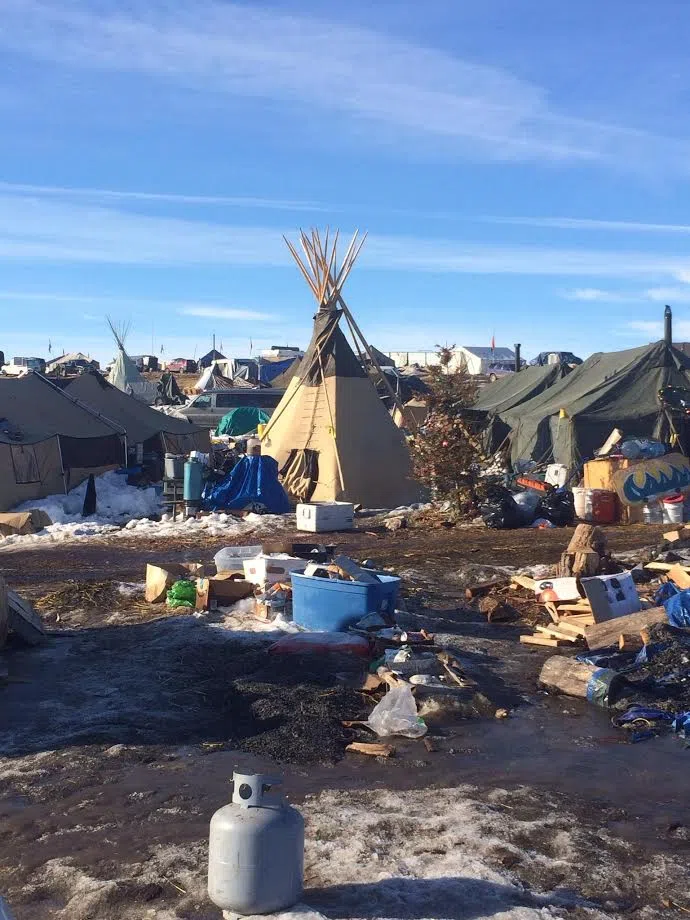
The lawsuit, filed in 2019, concerns demonstrations against the construction of the crude oil pipeline, also known as DAPL, that took place in rural south-central North Dakota in 2016 and 2017.
North Dakota claims the federal government caused the protests to grow in size and intensity by unlawfully allowing demonstrators to camp on federal land. The state says it had to pay millions of dollars on policing and cleaning up the encampments as a result. The United States denies the state’s allegations.
North Dakota U.S. District Court Judge Daniel Traynor in April 2025 sided with the state and ordered the executive branch to pay North Dakota the $28 million sum, a decision the U.S. Department of Justice later appealed to the 8th Circuit.
If the settlement moves forward, North Dakota would receive a “substantial monetary payment” from the United States, attorneys said Friday. As a condition of the agreement, the Department of Justice wants Traynor’s judgment and three other orders in which he ruled against the United States to be voided. That includes the court’s 120-page ruling from April 2025.
Both parties said Friday that having the rulings nullified wouldn’t have a significant negative impact on the public, since the documents could still be cited even if they no longer hold the weight of court orders.
At the same time, Guynn said the Department of Justice wants the orders vacated because it doesn’t want the legal conclusions Traynor made to influence the outcome of future lawsuits.
“The downstream consequences of keeping these on the books is troublesome for the United States,” he said during the hearing. If Traynor does not agree to axe the rulings, the United States would likely no longer be willing to settle and move forward with its appeal instead, Guynn added.
Traynor’s orders make findings about the federal government’s responsibility under the Federal Tort Claims Act — the law North Dakota filed the suit under — which the state noted previously in court filings “could have utility holding the federal government to account” in the future.
Still, attorneys for the state said they believe this trade-off is outweighed by the time and money the public would save by not going through the appeals process. North Dakota would also avoid the risk of having Traynor’s judgment overturned by higher courts.
Wrigley said the settlement will be made public once it’s finalized.
The United States’ appeal of Traynor’s decision has been on hold since last summer, when the state and federal government informed the 8th Circuit Court of Appeals they had started settlement negotiations and wished to pause the case.
The 8th Circuit will have to first send the case back to Traynor before he could grant the parties’ requests.
The case went to trial in Bismarck in early 2024. During the four-week trial, the court heard from witnesses including former governors Doug Burgum and Jack Dalrymple, Native activists, federal officials and law enforcement.
The Dakota Access Pipeline carries crude oil from northwest North Dakota to Illinois. It crosses the Missouri River just north of the Standing Rock Sioux Reservation, which prompted the tribe to begin protesting the pipeline on the grounds that it poses a threat to its water supply and sovereignty.
North Dakota’s lawsuit originally requested $38 million in damages from the federal government. Traynor ordered the executive branch to pay $28 million since the U.S. Department of Justice previously gave the state $10 million as compensation for costs it spent related to the protests.







Comments